Tetebatu: rice terraces, monkey forest and weaving villages
Updated October 24, 2026 · 5 min read
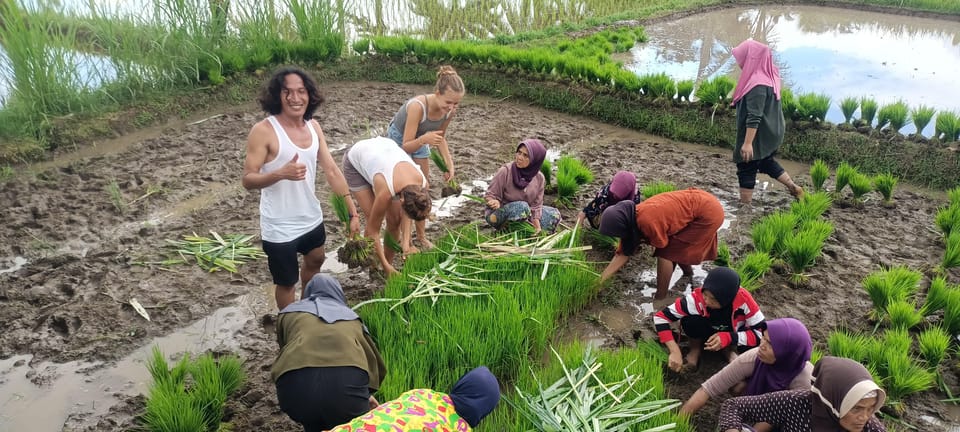
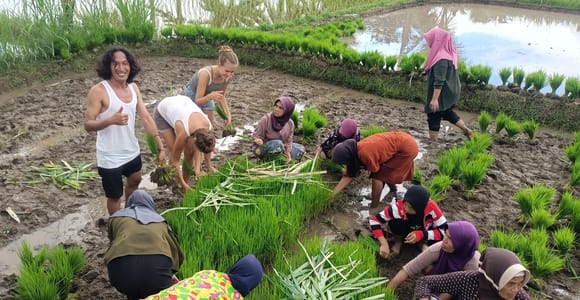
Tetebatu works best as a walking and village day, not as a checklist of attractions. Choose a route that leaves time in the rice landscape; adding distant beaches or too many craft stops can turn it into a day spent entering and leaving a vehicle.
Two common tour styles
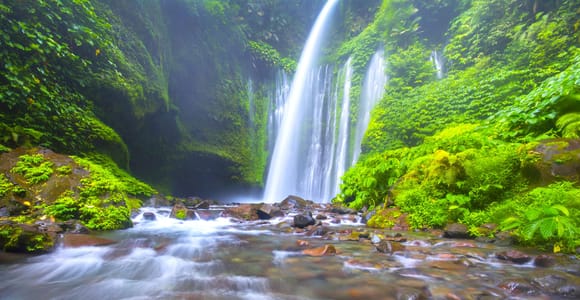
The Tetebatu rice terraces, waterfalls, spices and monkey forest tour is listed with versions lasting 5–11 hours. The range means you must read the chosen option rather than assume every booking has the same pickup and route. Another Tetebatu tour with a waterfall and weaving village lasts 5–8 hours and places more emphasis on craft and village context.
Neither title should be read as a wildlife promise. Monkeys move freely, and sightings depend on the day. Do not feed them, display food or reach toward an animal for a photograph.
What the walk feels like
Expect narrow paths, irrigation edges, uneven ground and muddy sections after rain. Ask how much is walked, whether footwear may get wet, and whether the route can be shortened. The shade and elevation may feel gentler than the coast, but humidity still matters. Carry water and sun protection; allow the guide to set a safe pace.
Village visits without theatre
A useful guide explains crops, irrigation, spices and weaving without presenting residents as exhibits. Ask whether purchases are optional and whether the itinerary includes a demonstration, a shop or a working cooperative. A respectful visit leaves room to decline and to ask before photographing people.
Our recommendation
For most visitors, the rice-terrace, waterfall and spice tour gives Tetebatu itself the clearest focus. Choose the weaving-village version when textile traditions are a genuine priority. Whichever you book, check the exact duration and pickup option: those details explain the unusually wide time ranges better than the headline does.